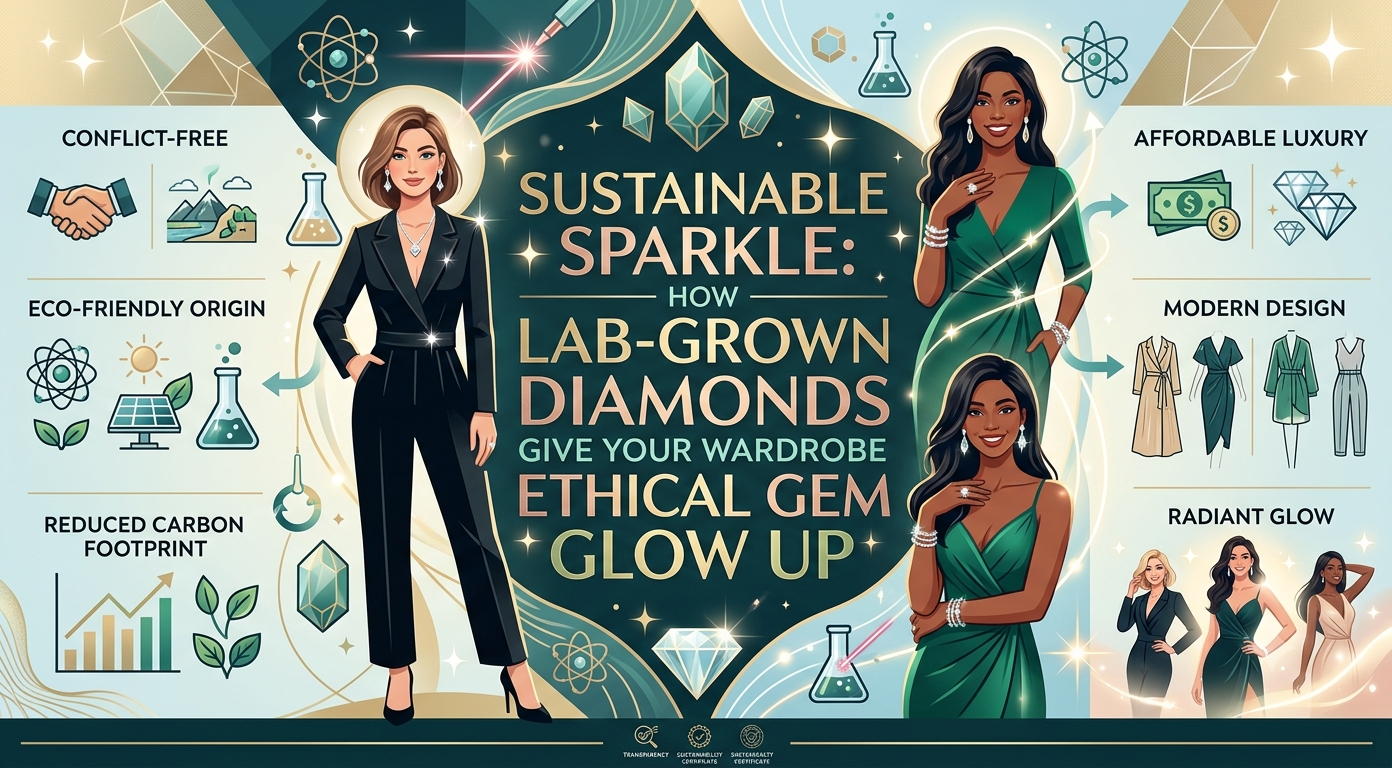
The global fashion and luxury landscape is undergoing a profound structural shift, and Australia is sitting right at the epicenter of this sparkling revolution. For generations, the allure of a diamond was inextricably linked to its deep-earth origins, its historic rarity, and, unfortunately, a complex web of environmental disruption and opaque ethical supply chains. But a new era of fine jewelry has arrived down under.
Modern Australian consumers are no longer willing to compromise their personal values for the sake of luxury. The contemporary jewelry lover demands absolute transparency, ecological responsibility, and uncompromising aesthetic excellence.
Enter the lab-grown diamond—a genuine, structurally identical gemstone that offers all the breathtaking brilliance, fire, and scintillation of a mined stone without the heavy ecological footprint.
Whether you are looking to elevate your daily corporate style, searching for a milestone engagement ring that tells a story of love for both your partner and the planet, or aiming to curate a timeless, ethical jewelry capsule collection, incorporating lab-grown diamonds into your rotation is the ultimate style upgrade.
This is your definitive, master-class guide to why these modern marvels are capturing the hearts of conscious consumers across the nation, the profound science behind their creation, and exactly how you can seamlessly integrate this sustainable sparkle to achieve an authentic ethical Gem Glow Up in Australia.
To truly appreciate the value, beauty, and revolutionary nature of a lab-grown diamond, it is crucial to dismantle a persistent myth right away: lab-grown diamonds are not fake diamonds. They are not cubic zirconia (CZ), they are not synthetic moissanite, and they are not cheap glass imitations.
In a historic ruling, the US Federal Trade Commission (FTC) officially amended its definition of a diamond to include grown gems, declaring that a diamond is pure carbon crystallized in the isometric system—regardless of whether it came from the ground or a controlled laboratory environment.
Physically, chemically, and optically, lab-grown diamonds are 100% identical to diamonds pulled from the earth. They possess the exact same atomic cubic crystal structure, the same refractive index of 2.42, the same dispersion (fire) rating of 0.044, and the ultimate score of 10 on the Mohs hardness scale.
Deep within high-tech laboratories, scientists recreate the exact, intense geological conditions that occurred billions of years ago miles beneath the Earth’s mantle. There are two primary, highly sophisticated methodologies utilized to cultivate these gems:
HPHT (High Pressure High Temperature): This method directly replicates the crushing mechanical forces of the earth. A tiny diamond seed is placed into a large press alongside pure carbon graphite. The growth cell is subjected to staggering pressures of over 1.5 million pounds per square inch and heated to temperatures exceeding 1,500°C. Under these conditions, the graphite melts and recrystallizes atom by atom around the seed, growing a rough diamond over several weeks.
CVD (Chemical Vapor Deposition): A newer, incredibly precise technique that is highly favored for producing exceptionally pure jewelry-grade crystals. A diamond seed plate is placed inside a sealed vacuum chamber filled with a carbon-rich gas mixture, such as methane and hydrogen. The chamber is ionized using microwave energy, converting the gas into a glowing plasma. This plasma breaks down the molecular bonds of the gas, causing a rain of pure carbon atoms to deposit and crystallize onto the seed layer by layer, mimicking the natural stellar formation of carbon.
[Methane & Hydrogen Gas] -> [Microwave Plasma Ionization] -> [Pure Carbon Atoms Deposit Layer-by-Layer] -> [Raw CVD Diamond Crystal]
The resulting rough gemstone requires the exact same master craftsmanship to cut, polish, and facet as a traditional stone. To the naked eye, and even under a traditional jeweler’s 10x magnification loupe, they are completely indistinguishable. It takes multi-thousand-dollar laboratory spectrometers to detect the subtle, microscopic growth patterns that separate a lab-grown gem from a mined one. When you wear a lab-grown diamond, you are wearing pure science transformed into pure art.
Australia has always maintained a deeply rooted, cultural connection to nature. From our pristine coastal shorelines and delicate marine ecosystems to the vast, rugged expanses of the red outback, the preservation of our natural heritage is baked directly into the Australian identity. This values-driven lifestyle heavily influences consumer spending habits. Today’s Australian consumer expects radical transparency, social justice, and superior craftsmanship from the brands they support.
Here is why thousands of Australians are opting to ditch the old mining paradigms and embrace an ethical Gem Glow Up:
Traditional open-pit or underground diamond mining requires moving millions of tons of earth, disrupting fragile native ecosystems, displacing local wildlife, altering regional water tables, and leaving massive, irreversible scars on the landscape. To extract a single one-carat mined diamond, roughly 250 tons of earth must be excavated, and hundreds of liters of fuel are consumed by heavy machinery.
Conversely, lab-grown diamonds bypass the need for destructive excavation entirely. While growing diamonds requires a significant amount of electrical energy, the industry is transitioning toward clean energy infrastructure at an unprecedented rate. Many cutting-edge laboratories are powered entirely by dedicated solar arrays, wind farms, or hydro-electric energy plants, offering a carbon-neutral or significantly lower-emission alternative. For an eco-conscious shopper, knowing that your jewelry did not cost a piece of the earth brings a distinct, modern peace of mind that elevates the emotional value of the piece.
The phrase “blood diamond” or conflict diamond has long cast a dark shadow over the traditional global jewelry trade. While the implementation of the international Kimberley Process in 2003 worked to clean up global supply chains, complex systemic loopholes remain. Tracking the exact geographic origin of a mined stone through dozens of international cutting centers, rough brokers, and trading hubs is notoriously difficult.
Lab-grown diamonds offer an airtight, unassailable chain of custody. They are tracked seamlessly from the exact facility they were grown in, straight to the cutting house, and into your hands. There is zero risk of financing armed conflict, zero involvement with exploitative child labor, and zero connection to unsafe, unregulated working environments in developing nations. It is luxury that is completely free of human suffering.
Perhaps one of the most compelling aspects of the lab-grown diamond movement is the profound economic advantage. On average, lab-grown diamonds cost anywhere from 50% to 70% less than mined diamonds of identical cut, color, clarity, and carat weight.
A Common Misconception Clarified: This dramatic price differential has absolutely nothing to do with a lack of quality, and everything to do with a shorter, highly optimized supply chain.
Mined diamonds change hands dozens of times from the original mining consortium to rough brokers, international exporters, cutting houses, wholesalers, and finally retail storefronts, with heavy markups added at every single milestone. Lab-grown diamonds feature a direct, streamlined path to market.
For the consumer, this means your purchasing power stretches vastly further. Instead of settling for a smaller stone with visible inclusions due to strict budget constraints, you can opt for a larger carat weight, a flawless clarity grade, and an ideal cut without financial strain. It represents a smarter, more deliberate allocation of capital.
Jewelry should never be an afterthought or a temporary accessory destined for a landfill. It is an intimate extension of your personal style, a tangible anchor for your daily outfits, and an instant boost of confidence. Elevating your wardrobe with lab-grown diamonds is all about balancing timeless, versatile elegance with your fluid, everyday lifestyle.
To help you curate a sustainable diamond capsule collection designed to turn heads from coastal beachside towns to metropolitan city centers, we have broken down the essential pieces you need.
Sustainable Diamond Capsule
├── Everyday Luxuries (Minimalist, Versatile)
│ ├── Solitaire Studs (0.50 – 1.00ctw)
│ ├── Delicate Pendant Necklace
│ └── Stackable Eternity Bands
└── High-Octane Statement Pieces (Glamorous, Bold)
├── Classic Tennis Bracelet (3 – 5ctw)
└── Architectural Fashion Rings (Emerald/Marquise)
A true wardrobe glow up means moving far away from cheap, fast-fashion, gold-plated jewelry that tarnishes within months or turns your skin green, and investing in pieces that endure for lifetimes.
If you choose to own only one pair of diamond earrings for the rest of your life, make it a set of pristine lab-grown solitaire studs. A pair of 0.50 to 1.00 total carat weight round brilliant or princess-cut lab-grown studs pairs effortlessly with a crisp white organic linen shirt and denim for a relaxed morning coffee run in Melbourne, or a tailored wool blazer for a corporate board presentation in Sydney. They sit elegantly on the ear, capturing natural light with every movement without ever overwhelming your look.
A brilliant-cut round, minimalist pear-shaped, or romantic oval-cut lab-grown diamond resting gently at the base of your throat on a fine 14k or 18k recycled gold chain adds an instant touch of calculated refinement. It is subtle enough to wear comfortably during an afternoon gym session or a casual supermarket run, yet it catches the light beautifully when you dress up for a coastal weekend lunch along the coast.
Move over plain, unadorned metal bands. Fine half-eternity or full-eternity bands pavé-set with brilliant lab-grown diamonds can be stacked alongside your existing heirloom rings, mixed with varying gold tones, or worn completely solo for a clean, Scandinavian-inspired, contemporary sparkle. They add texture and dimension to your hands, serving as a subtle sparkle that catches your eye throughout the working day.
When the calendar calls for high-octane glamour—think a highly anticipated opening night at the Sydney Opera House, a formal winery wedding in the Yarra Valley, a black-tie charity gala, or a major career milestone celebration—your jewelry should boldly command the room.
[Round Brilliant] -> Classic, maximum light return and fire.
[Emerald Cut] -> Vintage glamour, step-cut facets, structural lines.
[Oval / Marquise] -> Modern elegance, elongates the wearer’s fingers.
Historically an out-of-reach luxury reserved only for the ultra-wealthy, a full, fluid row of perfectly matching, high-quality diamonds wrapped elegantly around your wrist is the ultimate style statement. Thanks to the accessible pricing of lab-grown gems, a striking 3-carat, 5-carat, or even 10-carat tennis bracelet is now an attainable reality. It moves effortlessly with your arm, draping like liquid light against silk dresses or structured evening tailoring.
Because lab-grown diamonds allow for greater creative experimentation without exorbitant financial risk, you can step outside the boundaries of traditional round stones and seek out trendy, architectural shapes. Look for striking emerald cuts with vintage step-facets, elongated cushion cuts that ooze romance, or sharp, striking marquise and pear diamonds set in bold, thick, chunky recycled gold bands. These act as instant conversation starters, signaling that you are a collector who understands both high-fashion and ethical consumerism.
Navigating the open diamond market can feel overwhelming if you don’t know what to look for, but shopping for a lab-grown diamond follows the exact same time-tested, rigorous quality principles as traditional gems. When you are ready to make your investment, always keep the classic 4 Cs in mind, alongside a few modern sustainable criteria.
Attribute | What It Represents | Expert Tip for Lab-Grown Buyers |
Cut | The precision of the facets, angles, and proportions. This determines how beautifully the diamond reflects and refracts light to create sparkle. | Never compromise here. An “Excellent” or “Ideal” cut ensures maximum light return, effectively hiding minor color tints or tiny internal characteristics. |
Color | The presence or absence of a yellowish or brownish body tint. Graded on an alphabetical scale from D (completely colorless) down to Z (noticeably tinted). | Take advantage of lab-grown savings! Aim for the D-F (Colorless) or G-H (Near Colorless) range for an icy, ultra-bright, high-end look. |
Clarity | The presence of internal structural characteristics (inclusions) or surface flaws (blemishes) formed during growth. | Look for VS1 or VS2 (Very Slightly Included) or SI1. These stones are completely “eye-clean,” meaning your naked eye cannot see flaws without microscopic magnification. |
Carat | The physical weight measurement of the diamond crystal. | This is where lab-grown shines. If your budget originally allocated for a modest 1-carat mined stone, you can easily upscale to a breathtaking 1.50 or 2.00-carat lab-grown diamond. |
When you are shopping within Australia, never accept a jeweler’s word alone regarding a stone’s quality. Demand independent, third-party laboratory grading certification.
Reputable world-class institutes like the International Gemological Institute (IGI) and the Gemological Institute of America (GIA) evaluate lab-grown diamonds with the exact same strict grading parameters and advanced laser testing as mined stones. A certificate guarantees the diamond’s exact specifications, validating its authentic value and ensuring your investment is fully protected.
Furthermore, to ensure your new jewelry piece is genuinely eco-responsible from top to bottom, look closely at the metal settings. Always pair your ethical lab-grown diamond with 100% recycled gold, white gold, or platinum.
The traditional mining of precious metals is equally intensive on the earth, so choosing a jeweler who utilizes recycled gold and local bench-craftsmanship completes the circular economy cycle. This step closes the loop perfectly, ensuring your purchase is zero-waste, low-impact, and thoroughly green.
Choosing a lab-grown diamond is far more than a fleeting style choice or a shortcut to a larger stone—it is a conscious, empowering step toward a mindful, sustainable lifestyle. It represents a beautiful, harmonious alignment of cutting-edge human ingenuity, ethical accountability, and timeless luxury.
When you choose lab-grown, you aren’t sacrificing a single ounce of beauty, durability, structural integrity, or prestige. Instead, you are gaining complete financial freedom, absolute transparency, and a dazzling addition to your wardrobe that you can wear with unyielding pride.
The days of choosing between looking good and doing good are officially over. Give your personal style the ethical Gem Glow Up it truly deserves. Explore our curated, fully certified collection of Australian-designed lab-grown diamond jewelry today, and step out into the world radiating a sustainable sparkle that feels every bit as magnificent as it looks.


© 2026 Gemglowup-au.com | All Rights Reserved